Visual symbols of Ukrainian statehood in vytinanka
Preservation of Ukrainian traditions, respect and love for Ukrainian art is an important indicator of the formation of the nation, its civic consciousness and patriotism. It is vytynanka, which is one of the types of decorative and applied art and has its roots in ancient times, that can unite Ukrainians in creativity and love for the country.
Vytinanka is a very ancient art of paper cutting, its roots go back to the 2nd century BC. It was then that paper was invented in China. And the craftsmen there very quickly found a use for this material, in addition to the main one - they began to carve figurines of gods for various major holidays. These were the first vytynankas [1].
In Ukraine, the first paper vytynankas appeared in the 17th-18th centuries. These were pads for seals, the so-called "custodians".
In those days, seals were printed on letters and documents in wax through a paper custodian, which protected the impression from destruction. Apparently, the Cossack clerks of the 18th century. had a lot of free time and inspiration, because they managed to turn such a simple thing into art. Folded into two or four pieces of paper, symmetrical floral or geometric ornaments or entire heraldic compositions were cut out, with banners, cannons, balls, spears, timpani, trumpets, maces, quills, and other trinkets, leaving a place in the center for a seal impression [2].
These carvings, executed with high skill, add color to the "national seal" - a Cossack with a musket located in the center of the custodian,
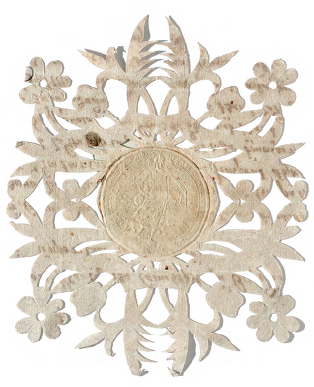
Custodians with imprint of the seal of the Zaporizhzhya army from the station wagon of the Little Russian College. Ivan Charnysh to the rank of Bunchuk comrade on December 17, 1775
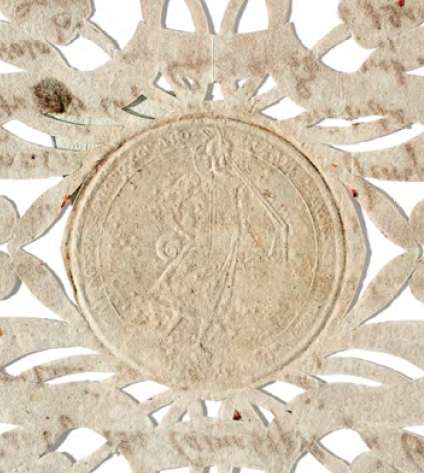
On these custodians, we see an imprint of a seal depicting a Cossack with a musket.
The seals of the Zaporizhzhya army are considered by many researchers to be state symbols, because "Cossack seals, by their functions and external features, fully meet the basic criteria of the state."
In the 19th century, along with the appearance of paper, vytinanka also appeared in the villages of Ukraine. And "ordinary people began to decorate their homes not only with paint paintings, but also with paper carvings." [4].
The symbols used were supposed to protect the owners from misfortune. Therefore, everything embroidered, painted and carved by human hands served as amulets. They were made for good, for happiness, for health, for harvest, for love. In this way, people tried to miraculously influence the surrounding world.
"As in the house of the vytynanka, so the good stands on the porch."
So says folk wisdom.
At first, the stove was decorated with vytinans, because it added to the home life and beauty, which the Ukrainian soul always strives for. "They were used to decorate walls, windows, shelves, stoves, chimneys, stoves, as toys for children, etc." [5]. Vytynankas served as something like blinds or curtains, and also performed the functions of wallpaper and carpets, they were used to decorate shrines, altars and beams. In addition, they could be changed more easily according to the season, and it was quite convenient and profitable. Vytinanka was cheaper than carpet or cloth, and people lived very poorly. But the more affordable carpets and fabrics became, the less there were cut-outs in everyday life. But the interest in vytynanka has remained until now.
The art of carving is very diverse. Each carving is unique, each carries a part of the soul of the author, a part of the history of the region where the master lives and where his roots are.
According to technological and artistic features, vitynankas are divided into openwork and silhouette; single and complex; combined
- Cutouts in which the background is discarded, and the silhouette remains, which can be both solid and cut, are called silhouette.
- Openwork is called vytynanka, the lacy patterns of which are placed on a base (paper, cardboard, wall, glass...) Images are contained in slits.
- Single are made from one sheet of paper, single-colored (can be openwork and silhouette; symmetrical /uniaxial with mirror symmetry, multiaxial/ and asymmetrical).
- Complex carvings are composed of two or more elements. Almost always colorful.
- Combined (overlay) are complex cutouts with additional elements drawn with paint or punched out with a punch. [6]
Heorhiy Narbut, one of the creators of the state identity, was very fond of silhouette silhouettes in his early work, it was also drawn from the rapidly growing French fashion for silhouettes in the 18th century, and then it was picked up as a trend not much later by Ukrainians. It is impossible to say with accuracy what we learned from Bilibin when George was studying in St. Petersburg, because our (Ukrainians) traveled to Europe perhaps much more than the Russians, so when someone claims that this is Russian fashion that we used in ourselves - this is not entirely true, there are no exact confirmations of this, but there are many confirmations of our close communication with French circles in the 19th and 20th centuries.
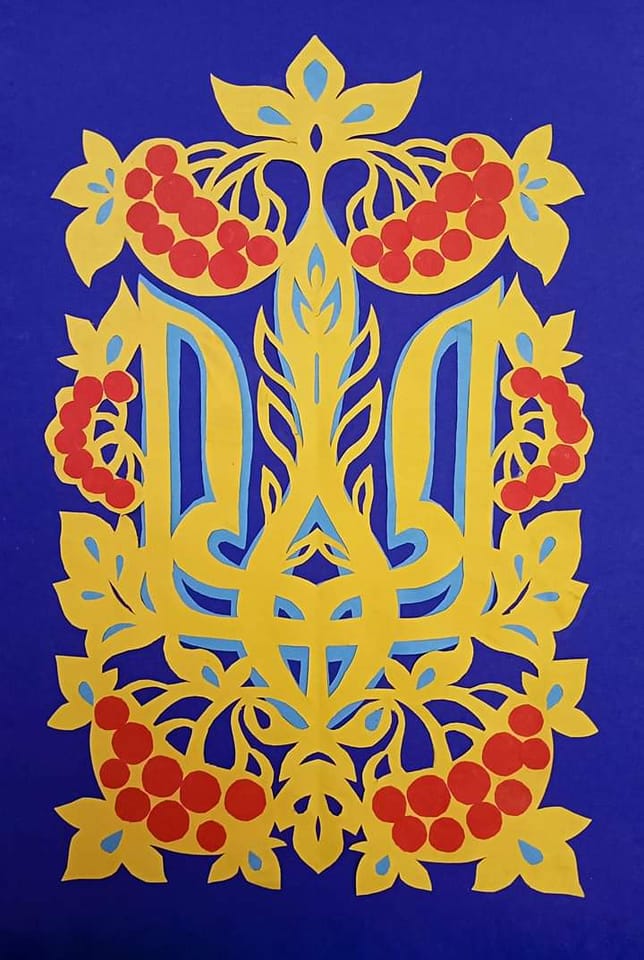
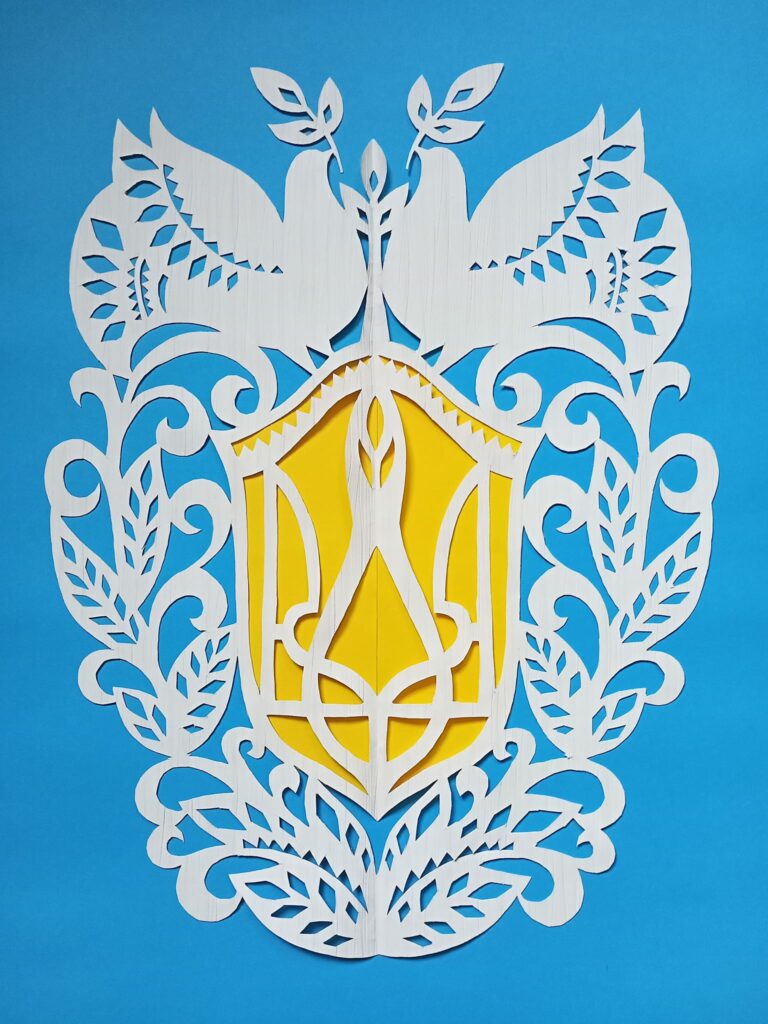
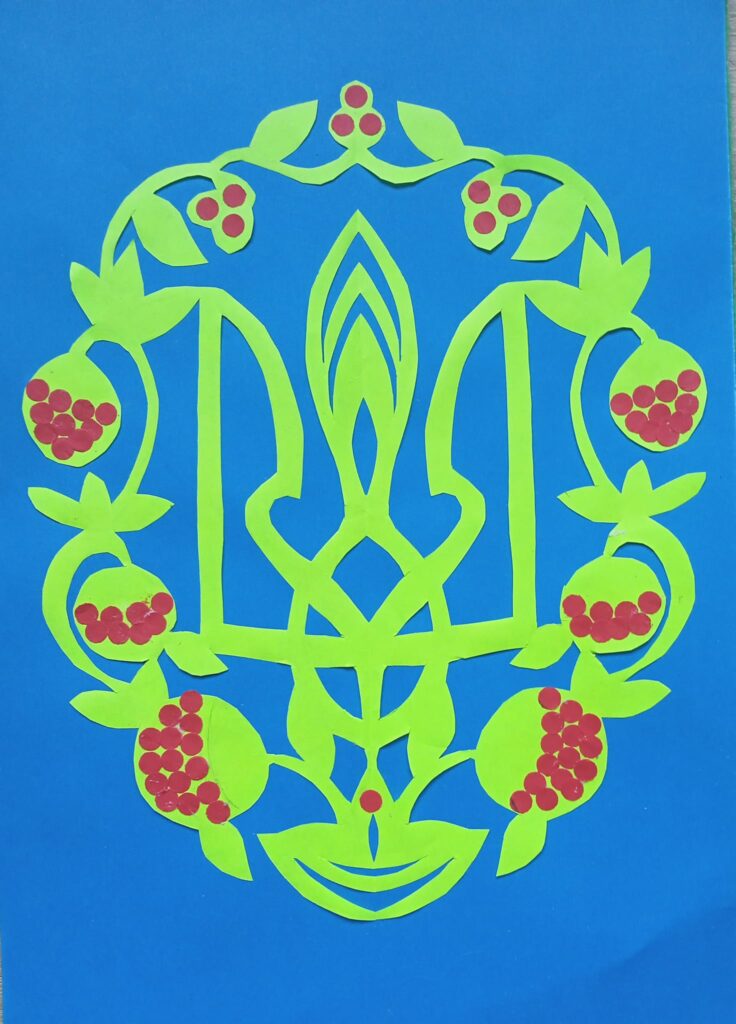
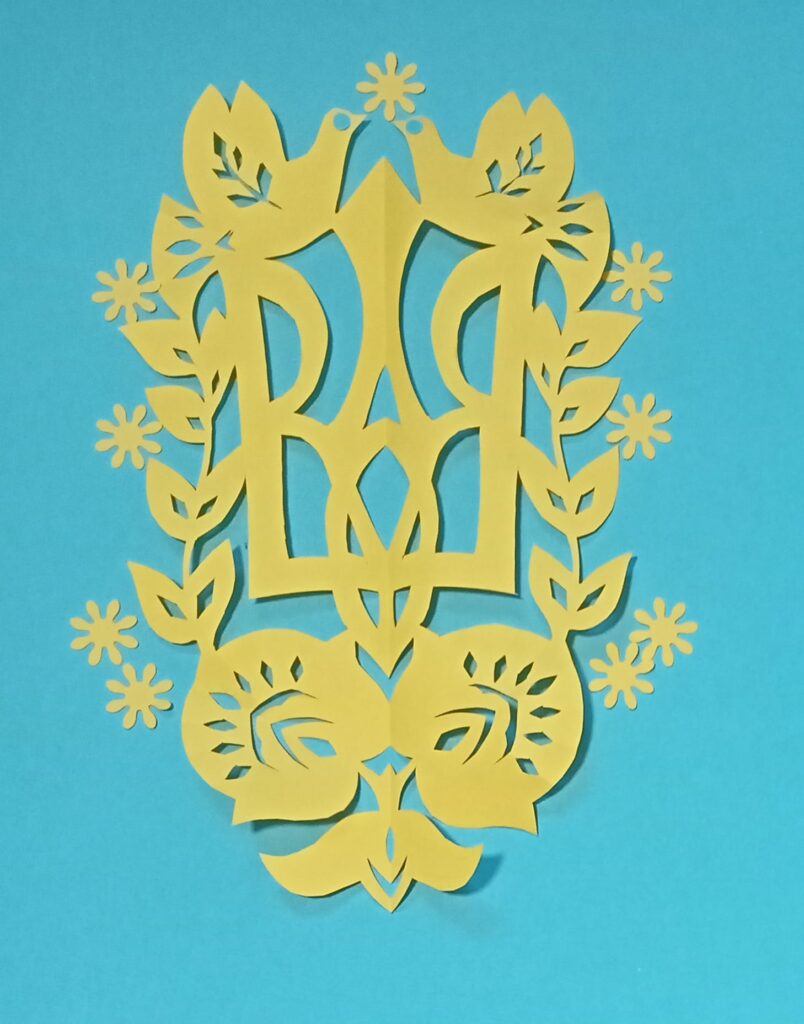
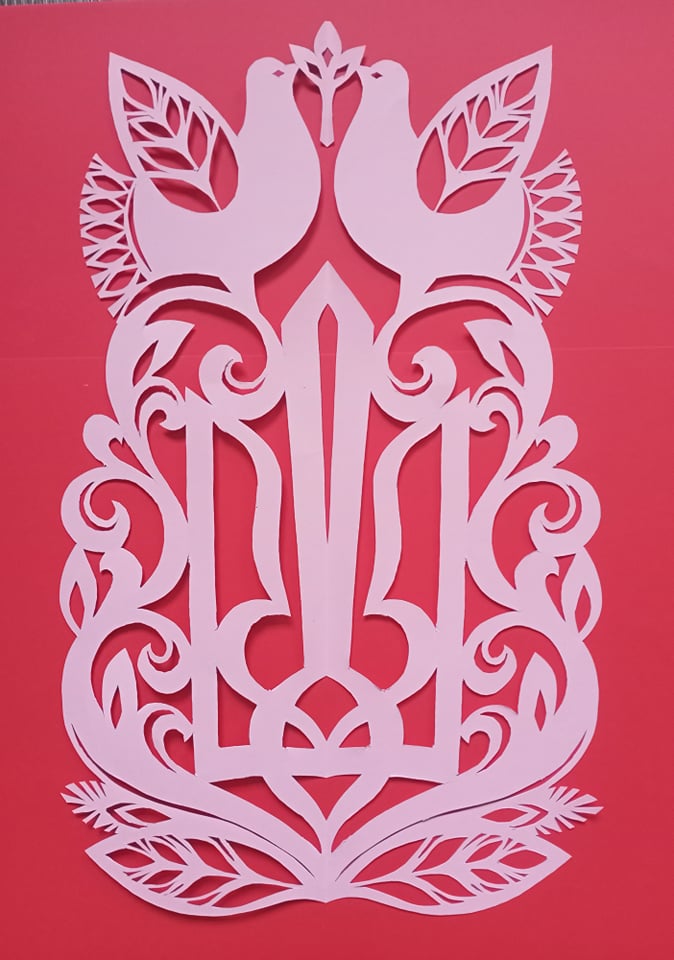
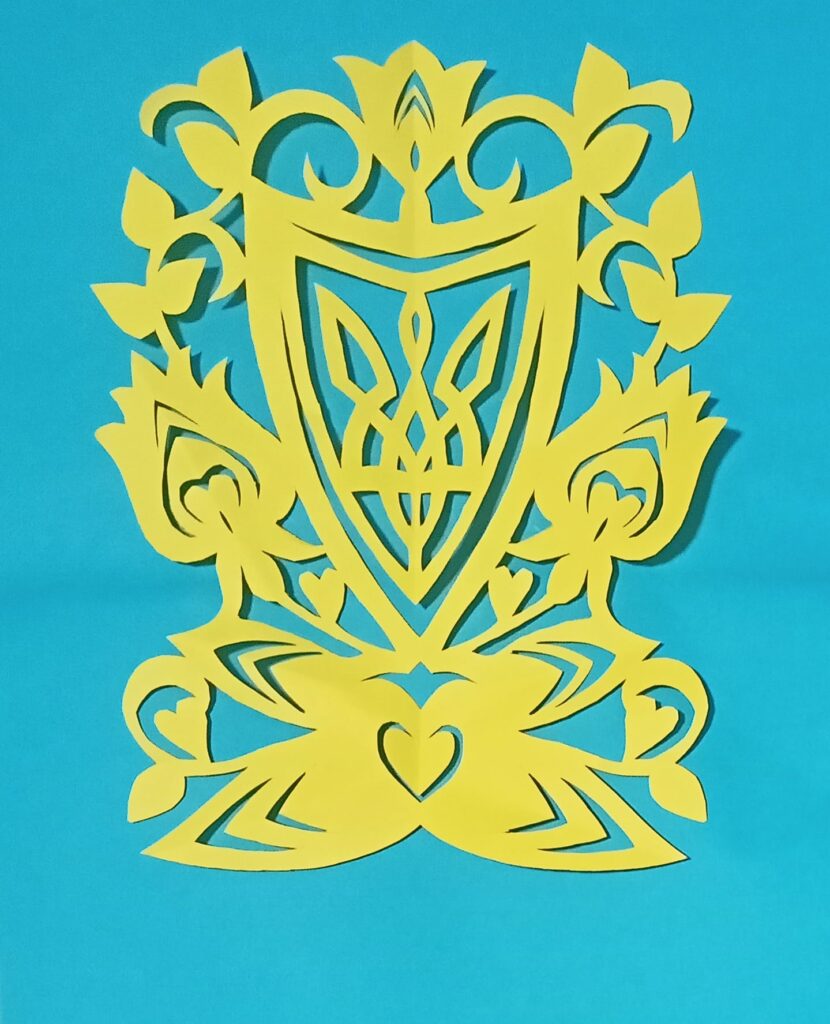
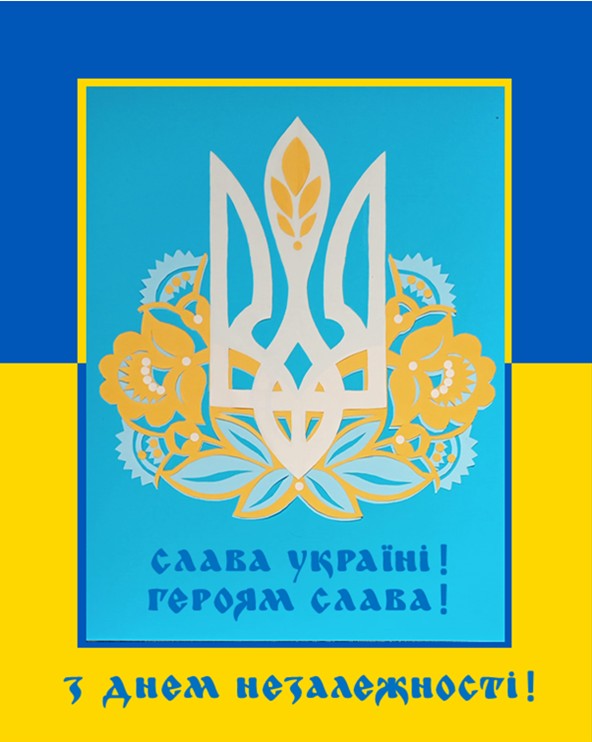
Today, Ukrainian vytynanka, like all types of folk art, are the roots and the genetic memory that unites Ukrainians in all corners of the world, wherever they are. But it is worth saying that this applies not only to Ukrainians. This art unites masters from different parts of the world, if they have common universal values. Nowadays, symbols of Ukrainian statehood are appearing more and more often in vytinanka, demonstrating the wave of patriotism awakened by the Maidan in 2014. Now, during the war, patriotism is getting even stronger and gaining new deep convictions. The Ukrainian people proudly use symbols of statehood in their work, and Vytinanka is no exception. They are often made in the blue-yellow colors of our flag...
Who is interested - I will gladly send you the full version by mail.
Order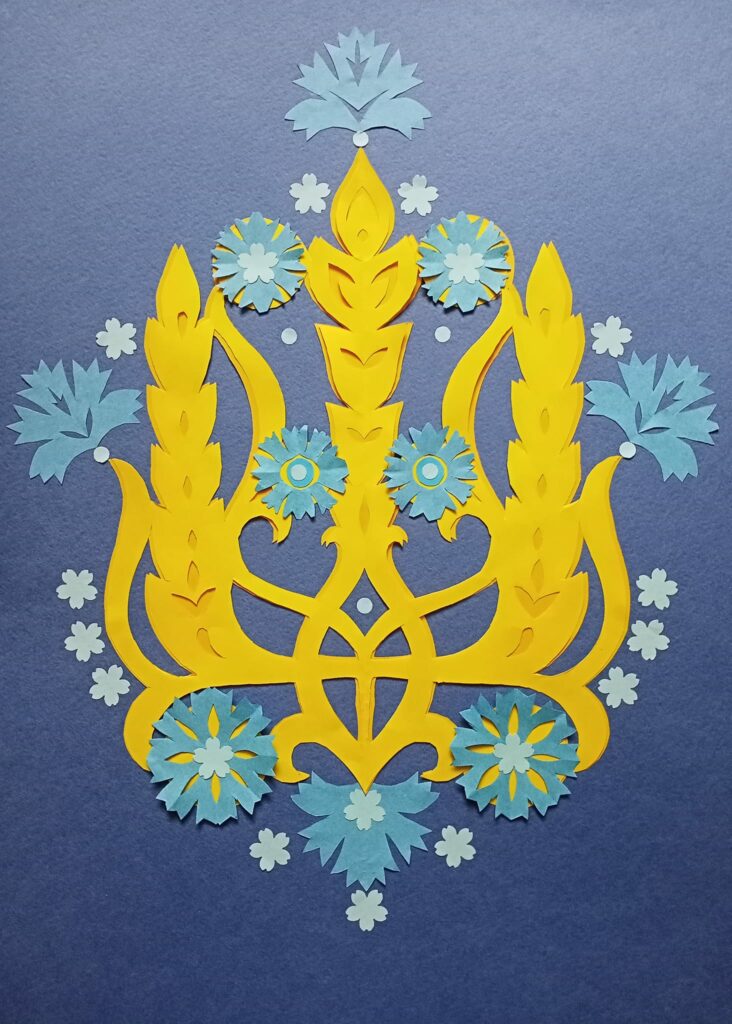
 English
  Українська
  Русский